Lecturer Dr. Afyon Kocatepe University, Sandıklı Vocational School
Ahmet Süslü
Sandıklı · 38.465° N, 30.270° E
daily values (build date)
elevation °azimuth °G0 W m−2
sunrise 08:00sunset 17:34H0 15.69 MJ m−2 day−1
Change the day
The preview changes only the band; the appearance of the page remains tied to the actual time.
Ahmet Süslü is a lecturer in the Agricultural Machinery and Technologies Programme of Sandıklı Vocational School at Afyon Kocatepe University, Türkiye. His work concentrates on global solar radiation prediction models, thin-layer drying kinetics, process control in compost tea production and agricultural automation.
Research
Global solar radiation prediction and solar energy systems
Empirical, satellite-based and AI-supported models are compared for the prediction of global solar radiation; the studies carried out for Mersin, the Lakes Region, İzmir, Adana, Afyonkarahisar and Manisa fall within this line. The line also includes work on a solar air heater with heat storage, an automation-controlled solar simulator and a portable I-V curve measurement device.
Related publications
- 2026Isı Depolama Malzemesi ile Bütünleşik Hava Isıtıcılı Güneş Kollektörünün Geliştirilmesi
- 2025Comparative Analysis of Empirical and AI-Supported Models in Global Solar Radiation Prediction for İzmir Province
- 2024Determining the Most Suitable Empirical Model for Global Solar Radiation Prediction in the Lakes Region
Thin-layer drying kinetics and drying models
This line concerns the description of thin-layer drying data with mathematical models. The Süslü & Külcü model (also referred to as the AMD model), developed jointly with Recep Külcü, is included in the ATATEK-Drying software; the published studies cover the convective drying of chokeberry and the microwave drying of mung bean sprouts.
Related publications
- 2025Comparative Analysis of Drying Kinetics, Color Change, Energy Consumption, and Mathematical Modeling Methods in Microwave Drying of Mung Bean Sprouts
- 2024Kurutma Modelleri için ATATEK-Drying Yazılımının Geliştirilmesi
- 2024Convective Drying of Chokeberry cv. "Viking" and Modeling of Drying Kinetics
Figure 2The Süslü & Külcü drying model and its published fitThe solid line shows the model curve computed on this page from the seven published coefficients, the dashed lines show the three terms of the equation, and the circles show the first 13 measurements, which are the ones printed as numbers in the publication (red pepper drying data, 39 measurements in total; the horizontal axis is the measurement index). The coefficients, RMSE and R² are the values reported in the publication. The term names are descriptive names used on this page only. Exploring the model through its coefficients Source: Süslü and Külcü (2024), Akademia Doğa ve İnsan Bilimleri Dergisi, 10(1), 51-61 (Table 1, Figures 3 and 4). Process control in composting and compost tea production
In the doctoral work, an AI-supported compost tea production system integrated into greenhouse automation was developed. The system comprises an automatic 60 L reactor, sensors for temperature, pH, electrical conductivity (EC), dissolved oxygen, total dissolved solids (TDS) and turbidity, and a Delta PLC that communicates with Python software over MODBUS. The process was optimised with a Deep Q-Network (DQN), which was first trained in a Python simulation and then run on the physical system. In the master's work, a process control device based on exhaust gas content was developed for composting systems.
Related publications
Figure 3Control loop of the compost tea production system and a DQN simulation running in the browserComponents in the drawing
- Reactor
- HDPE drum with a volume of 60 L; active volume 50 L.
- Sensors
- Temperature (T), pH, electrical conductivity (EC), dissolved oxygen (DO), total dissolved solids (TDS) and turbidity (Turb). No measured values are shown in the drawing.
- Actuators
- Recirculation pump (pumps the reactor liquid back into the reactor), blower (aeration through the diffuser) and peristaltic pump (nutrient dosing). All three are on/off controlled.
- PLC
- Delta PLC; the actuators are switched through relays and contactors.
- Communication
- The MODBUS RTU protocol is used between the PLC and the computer.
- Computer
- The software developed in Python monitors and logs the data and runs the DQN agent.
- DQN agent
- The agent was first trained in a simulation environment and then run on the physical system. The reward is calculated from the negative of the absolute difference between each sensor value and its setpoint.
The simulation cannot be run because this browser does not support the features it requires. The system drawing and its descriptions are given above.
The simulation script could not be loaded; reloading the page retries it. The system drawing and its descriptions are given above.
Simulation panel
This panel is a simulation, a simplified browser counterpart of the approach described in the thesis. The values are not experimental data; the network structure and the dynamics are illustrative.
Mode- Episode
- 0
- Epsilon
- 1.000
- Mean reward (last 10 episodes)
- –
- Reward of the last episode
- –
- Random policy
- –
- Random seed
- 2024
- Dissolved oxygen (mg/L)
- –
- pH
- –
- Actuators
- –
(a) Total reward per episode
(b) Dissolved oxygen, pH and actuator states within an episode
Description of the simulation
The state consists of four variables (dissolved oxygen, pH, EC and temperature). At each step, every variable approaches the equilibrium value determined by the actuators that are on, at the rate k, and normally distributed noise is added. The variables are kept within the ranges given in the table.
x(t+1) = x(t) + k · (x_eq − x(t)) + noise level · σ · N(0, 1)
x_eq = base + sum of the contributions of the actuators that are on
Coefficients of the simulation (illustrative; not measurements) Variable Base Recirculation pump Blower Peristaltic pump k σ Range Dissolved oxygen (mg/L) 1.5 −1.5 +6 −0.8 0.1 0.1 0 – 10 pH 8.3 −0.7 +0.5 −1.5 0.06 0.025 5.5 – 9.5 EC (mS/cm) 2.3 +0.8 −0.5 0 0.04 0.015 0 – 5 Temperature (°C) 23 +9 −4 0 0.05 0.08 10 – 45 The signs of the recirculation pump and blower contributions are taken from the correlation matrix in the thesis. The magnitudes of the contributions, the values of k and σ, and the direction of the effect of the peristaltic pump on pH and dissolved oxygen were chosen for illustration.
The reward is calculated by dividing the absolute differences between the four variables and their setpoints by the range of each variable, summing them and taking the negative. Dividing the differences by the range is a choice specific to this simulation. The observation of the agent is the deviation of each variable from its setpoint.
The agent is a network with 4-32-32-8 neurons per layer and ReLU activation. Training uses experience replay (20,000 transitions), a target network synchronised every 200 learning steps, the Huber loss and the Adam optimiser (learning rate 0.001, batch size 32, discount factor 0.9). Epsilon starts at 1 and is multiplied by 0.9994 at each learning step until it reaches 0.05. An episode is 120 steps. The network structure and these values are not taken from the thesis; they were chosen for illustration.
The random policy value is the mean reward of 40 episodes in which the actions are selected at random in the same simulation. When a setpoint is changed, epsilon is raised to at least 0.20. When a setpoint or the noise level changes, this mean is recalculated and is drawn in the plot starting from the episode at which the change was made. The same seed produces the same training run.
The drawing at the top shows the components of the compost tea production system developed in the doctoral work; no measured values appear in the drawing. The panel below is a simulation. In line with the approach described in the thesis, the agent switches the three actuators on and off, and the reward is calculated from the absolute differences between the four simulated variables and their setpoints. The reactor volume (60 L, active volume 50 L) and the initial setpoints (pH 8.0; EC 2.5 mS/cm; dissolved oxygen 5.0 mg/L; temperature 25.0 °C) are taken from the thesis. All other numbers in the panel are calculated in the visitor's browser with the equations given in the description of the simulation.Source: system and DQN approach, Süslü (2024, doctoral thesis); PLC-PC architecture, Süslü et al. (2026). Agricultural automation
This line covers PLC and sensor systems and greenhouse automation. A PLC-PC based monitoring and control architecture for compost tea production and the design of a compost tea module integrated into a greenhouse fertigation system are among its published studies.
Related publications
Waste to energy: biogas and biomass potential
Project 324K346 under TÜBİTAK ARDEB 1001 (3 June 2025 to 3 January 2027) takes animal waste, municipal solid waste and wastewater treatment sludge in the pilot cities as its inputs. Earlier published studies on the biogas potential of animal waste also belong to this line.
Publications
- Journal articles
- Book chapters
- Book editorship
- Conference papers
- Theses
When a mark is selected, the citation of the publication is shown on this line.
Data table
| Year | Journal articles | Book chapters | Book editorship | Conference papers | Theses | Total |
|---|---|---|---|---|---|---|
| 2011 | 0 | 0 | 0 | 1 | 0 | 1 |
| 2012 | 0 | 0 | 0 | 2 | 0 | 2 |
| 2013 | 0 | 0 | 0 | 0 | 0 | 0 |
| 2014 | 0 | 0 | 0 | 0 | 0 | 0 |
| 2015 | 1 | 0 | 0 | 1 | 0 | 2 |
| 2016 | 2 | 0 | 0 | 2 | 0 | 4 |
| 2017 | 1 | 0 | 0 | 0 | 0 | 1 |
| 2018 | 0 | 0 | 0 | 1 | 1 | 2 |
| 2019 | 1 | 0 | 0 | 0 | 0 | 1 |
| 2020 | 0 | 0 | 0 | 0 | 0 | 0 |
| 2021 | 1 | 1 | 1 | 2 | 0 | 5 |
| 2022 | 0 | 1 | 0 | 2 | 0 | 3 |
| 2023 | 0 | 0 | 0 | 1 | 0 | 1 |
| 2024 | 4 | 2 | 0 | 0 | 1 | 7 |
| 2025 | 2 | 0 | 0 | 0 | 0 | 2 |
| 2026 | 3 | 0 | 0 | 0 | 0 | 3 |
| Total | 15 | 4 | 1 | 12 | 2 | 34 |
Recent articles
Süslü, A., Külcü, R. ve Ertekin, C. (2026). Process Monitoring and Control of Compost Tea Production Using a PLC–PC Based Architecture. Mediterranean Agricultural Sciences, 39: 15. https://doi.org/10.29136/mediterranean.1874303
Külcü, R. ve Süslü, A. (2026). Prediction of SPAD Values Using Dominant Wavelength in Mung Bean Microgreens. Journal of Agricultural Machinery, 16(1), 57-69. https://doi.org/10.22067/jam.2025.89763.1284
Gökdoğan, O., Külcü, R. ve Süslü, A. (2026). Isı Depolama Malzemesi ile Bütünleşik Hava Isıtıcılı Güneş Kollektörünün Geliştirilmesi. Tekirdağ Ziraat Fakültesi Dergisi, 23(1), 75-85. https://doi.org/10.33462/jotaf.1579078
Külcü, R., Süslü, A., Karaaslan, S. ve Varol, H. T. (2025). Comparative Analysis of Drying Kinetics, Color Change, Energy Consumption, and Mathematical Modeling Methods in Microwave Drying of Mung Bean Sprouts. Selcuk Journal of Agriculture and Food Sciences, 39(3), 619-630. https://doi.org/10.15316/selcukjafsci.1790305
Süslü, A. (2025). Comparative Analysis of Empirical and AI-Supported Models in Global Solar Radiation Prediction for İzmir Province. Selcuk Journal of Agriculture and Food Sciences, 39(1), 108-120. https://doi.org/10.15316/SJAFS.2025.010
Software
ATATEK stands for "Akıllı Tarım Teknolojileri" (smart agriculture technologies). The software in the family was developed by Ahmet Süslü; the concept and design are shared by Ahmet Süslü and Recep Külcü.
ATATEK-Drying
A PHP-based web application that iteratively fits 14 thin-layer drying models to drying data and reports the best model according to the RMSE and R² criteria. Model 14 is the Süslü & Külcü (AMD) model.
ATATEK-Solar
Software developed for global solar radiation prediction models. It was used in the Lakes Region, İzmir and Adana studies.
ATATEK-Leaf
One of the image analysis tools in the ATATEK family.
ATATEK-Mezur
One of the image analysis tools in the ATATEK family.
sunupro
A dual-screen PowerPoint presentation tool organised by course, which remembers where it left off and offers a touch pointer.
Karar destek sistemi (KDS)
A decision support system under development within the TÜBİTAK 1001 (324K346) project. Based on waste type, waste quantity and candidate sites, the software calculates the most suitable location and scale for a biogas/biomass plant and converts waste quantities into their biogas, electricity and heat equivalents. The software is not yet publicly available; it is planned to be released as open source once the project is completed.
Afyon Kocatepe University, Sandıklı Vocational School
- Autonomous Agricultural MachineryAgricultural Machinery and Technologies
- Digital Agriculture TechnologiesAgricultural Machinery and Technologies
- Measurement and ControlAgricultural Machinery and Technologies
- MechatronicsAgricultural Machinery and Technologies
- Greenhouse TechnologyAgricultural Machinery and Technologies
- Agricultural Electrics and ElectronicsAgricultural Machinery and Technologies
- Informatics and Automation in Technological GreenhousesSmart Greenhouse Technologies
Who is Ahmet Süslü?
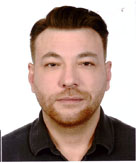
Ahmet Süslü (Lecturer Dr.) is a lecturer in the Agricultural Machinery and Technologies Programme of Sandıklı Vocational School at Afyon Kocatepe University, Türkiye. An agricultural engineer, he received his doctorate in agricultural machinery and technologies engineering from Isparta University of Applied Sciences in 2024. His work concentrates on global solar radiation prediction models, thin-layer drying kinetics, process control in compost tea production and agricultural automation; it includes the Süslü & Külcü drying model, developed jointly with Recep Külcü, and the ATATEK-Drying and ATATEK-Solar software.
Süslü is an agricultural engineer; he completed his master's and doctoral studies in agricultural machinery and technologies engineering. He pursued his doctoral studies with a YÖK 100/2000 Doctoral Scholarship.
As an undergraduate student he led a TÜBİTAK 2209-A project on a sample automation system for greenhouses, and in 2012 he founded a greenhouse automation venture with Techno-Entrepreneurship Capital Support.
He developed the ATATEK-Drying and ATATEK-Solar software; their concept and design are shared with Recep Külcü. The Süslü & Külcü drying model, developed jointly with Recep Külcü, is included in ATATEK-Drying.
Contact and identifiers
- asuslu@aku.edu.trOfficial correspondence
- mail@ahmetsuslu.comCorrespondence address used in the articles
- Afyon Kocatepe University, Sandıklı Vocational School, Sandıklı / Afyonkarahisar, TürkiyeAddress
| Record | Number or address |
|---|---|
| ORCID | 0000-0003-4016-589X |
| Scopus Author ID | 60367822800 |
| Web of Science ResearcherID | PEX-8673-2025 |
| YÖK Akademik | 438568 |
| TÜBİTAK ARBİS | TBTK-0021-5391 |
| Google Scholar | scholar.google.com/citations?user=OWrgiTwAAAAJ |
| DergiPark | dergipark.org.tr/tr/pub/@ahmetsuslu |
| ResearchGate | researchgate.net/profile/Ahmet-Sueslue |
| GitHub | github.com/ahmetsuslu |
| linkedin.com/in/ahmetsuslu |